A Harmonious Residential Space
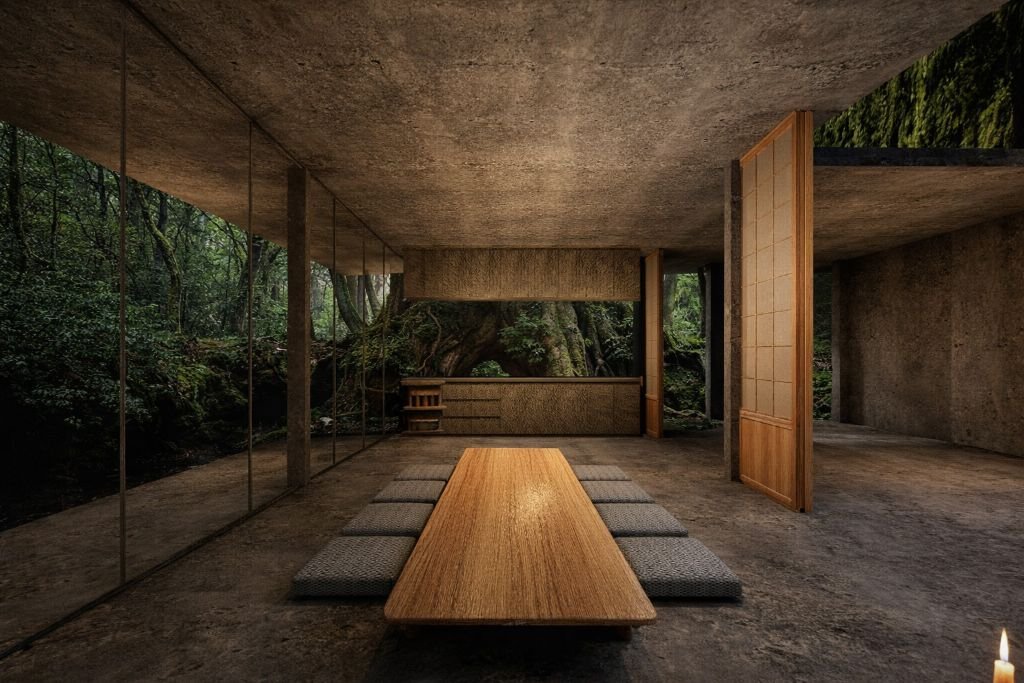
AMO NO OTO is an extraordinary architectural retreat that redefines the relationship between built form and pristine natural landscape. The name, translating to "Sound of Rain" in Japanese, perfectly captures this sanctuary's essence - a place where architecture becomes a vessel for experiencing nature's tranquility.
Nestled within a moss-covered ancient forest, this subterranean dwelling employs raw concrete, natural wood, and Japanese-inspired elements to create spaces that feel simultaneously cave-like and open. The design preserves existing trees, integrates natural water features, and uses minimal intervention to allow the forest to flow through and around the structure.
From meditation spaces overlooking forest streams to spa areas where pools embrace ancient tree trunks, every detail celebrates the dialogue between human habitation and wild nature. The use of shoji screens, natural stone, and earth-toned materials ensures the architecture recedes, allowing the surrounding landscape to become the primary experience.
Japanese-inspired meditation space with low table and forest vistas
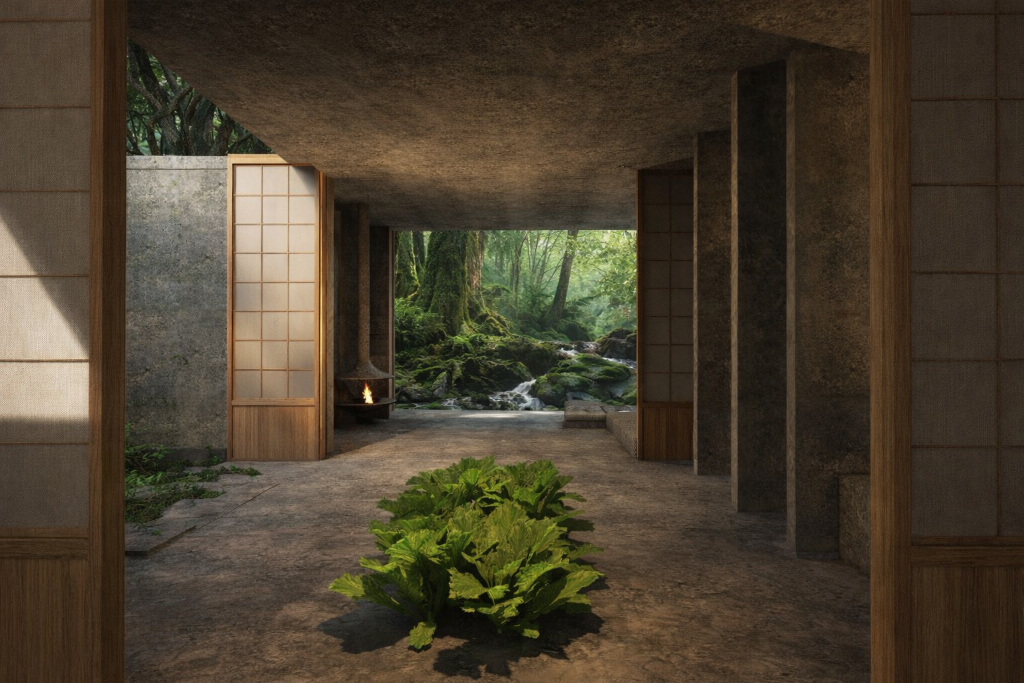
Traditional shoji screens framing the forest stream beyond
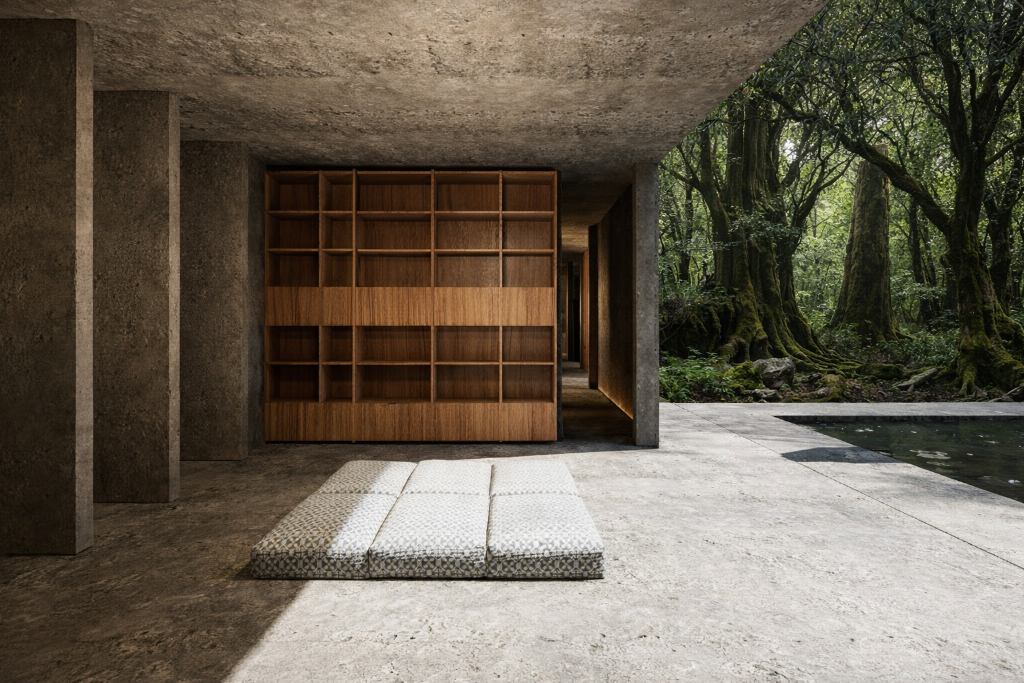
Custom wooden library wall with integrated storage and seating
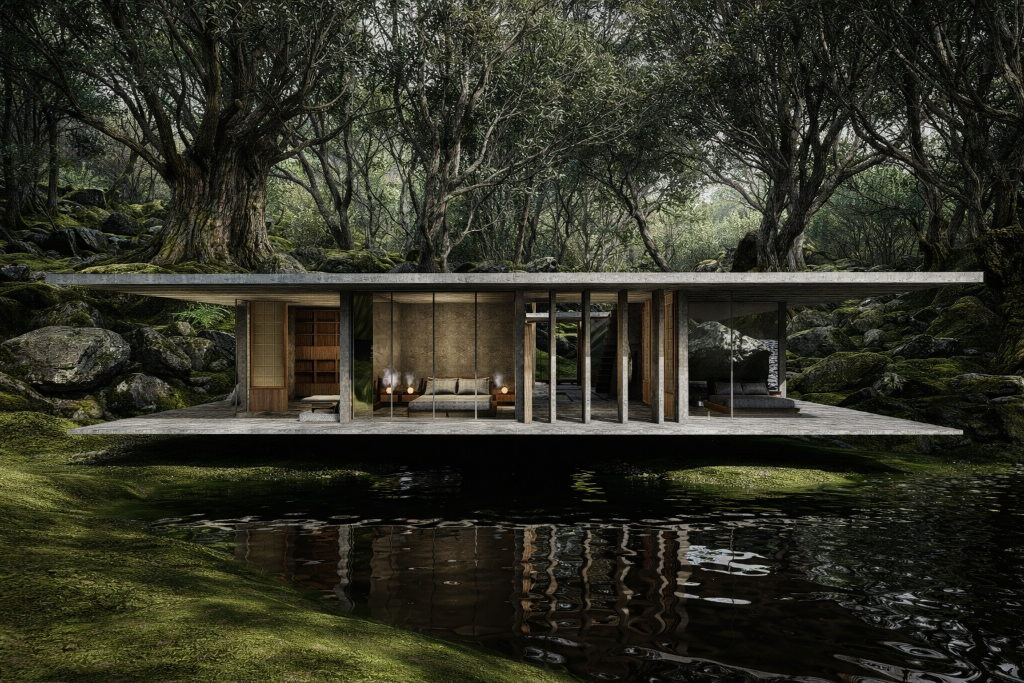
Floating pavilion reflecting in the moss-covered forest pool
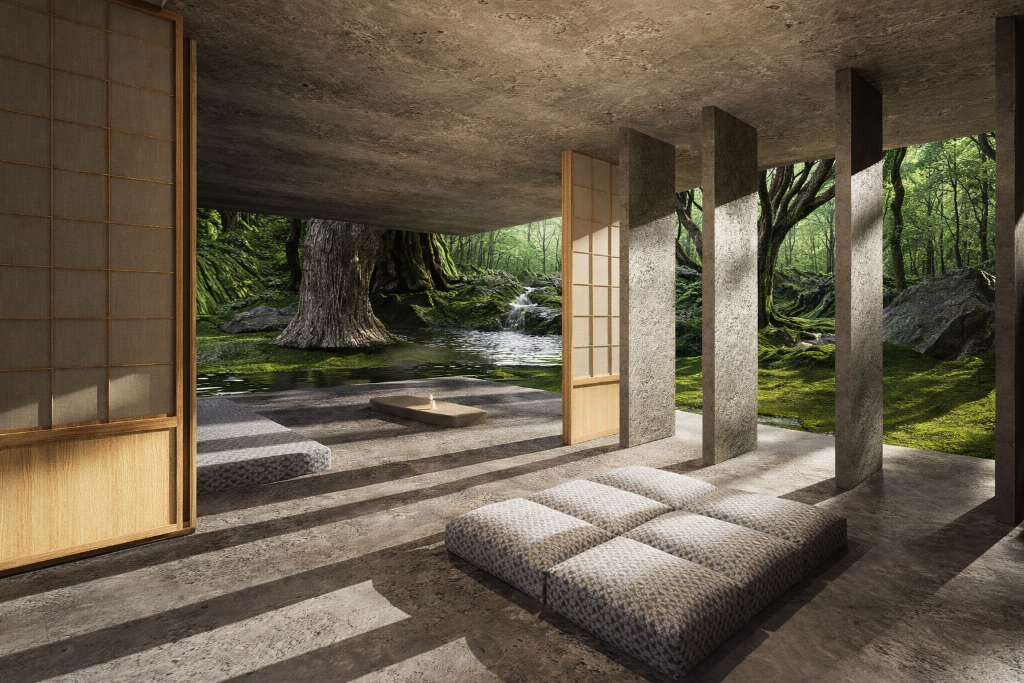
Massive concrete pillars frame intimate views of the ancient forest
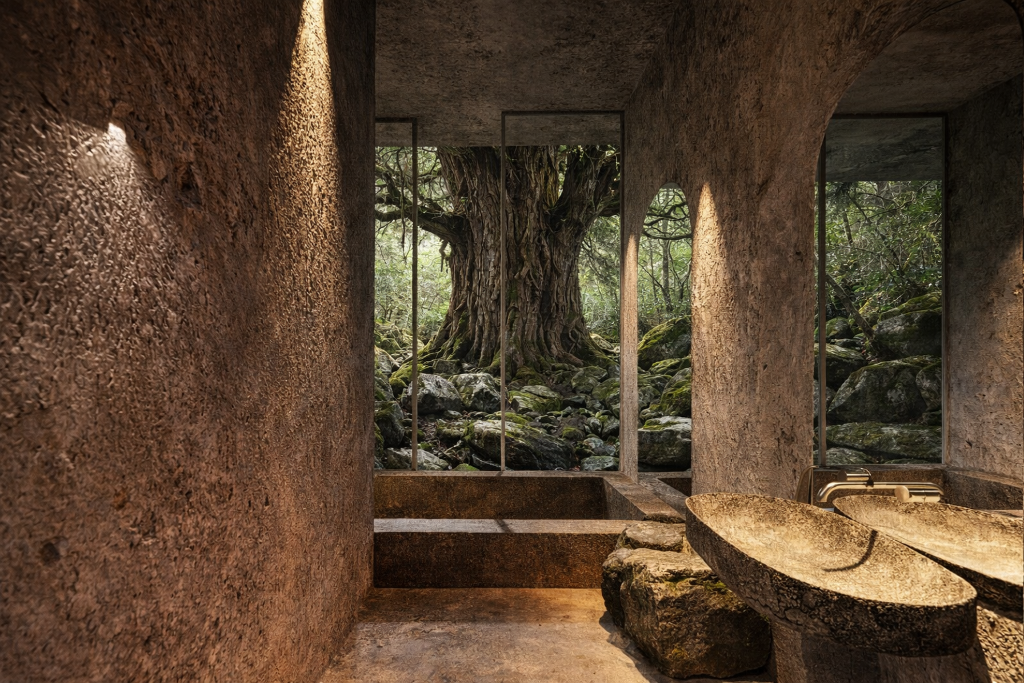
Raw stone bathroom with natural basin overlooking forest giants
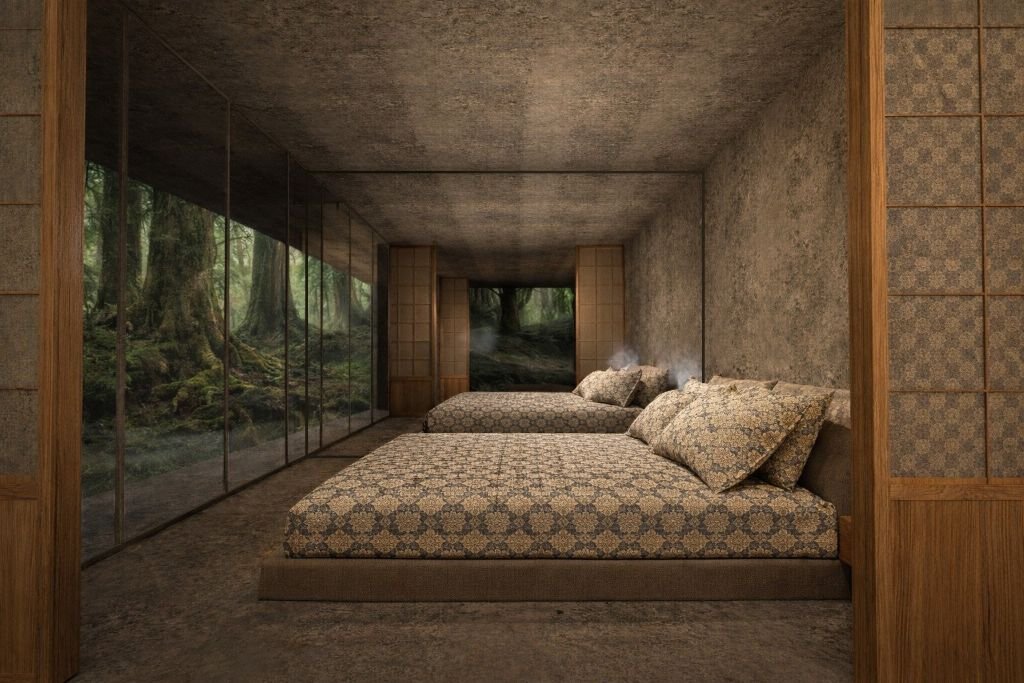
Minimalist bedroom with floor-to-ceiling forest views
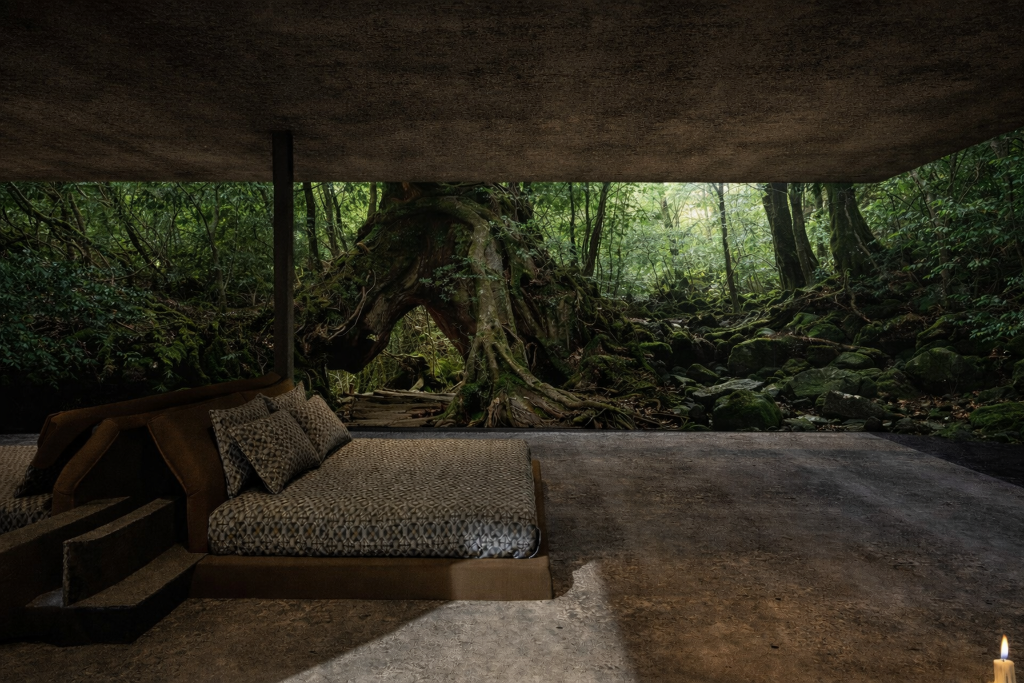
Intimate evening ambiance with natural surroundings
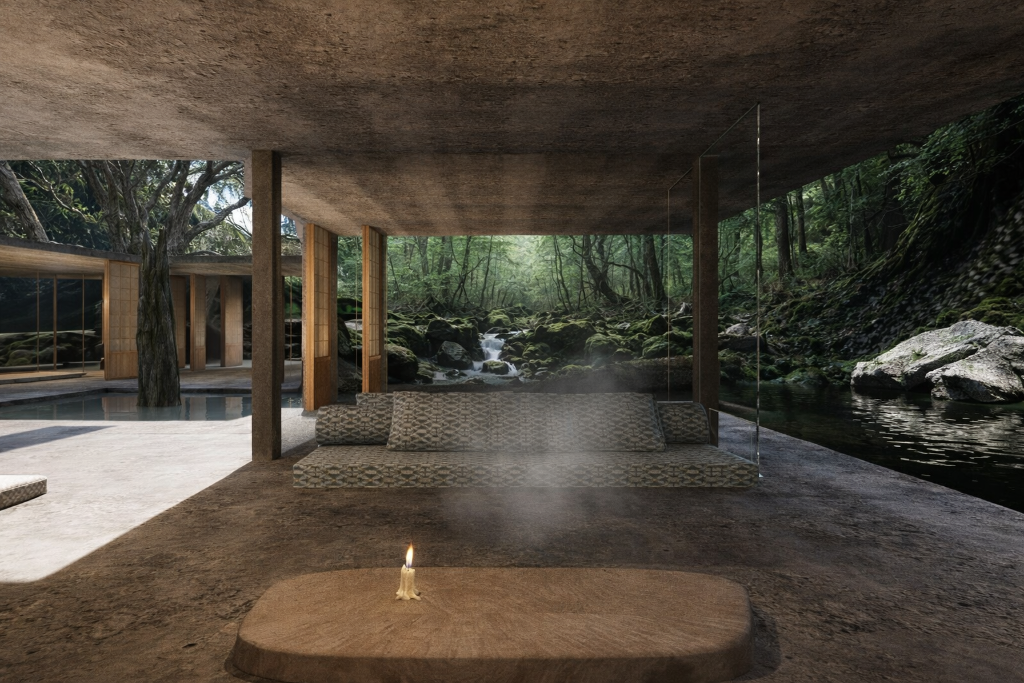
Tranquil meditation space overlooking forest stream
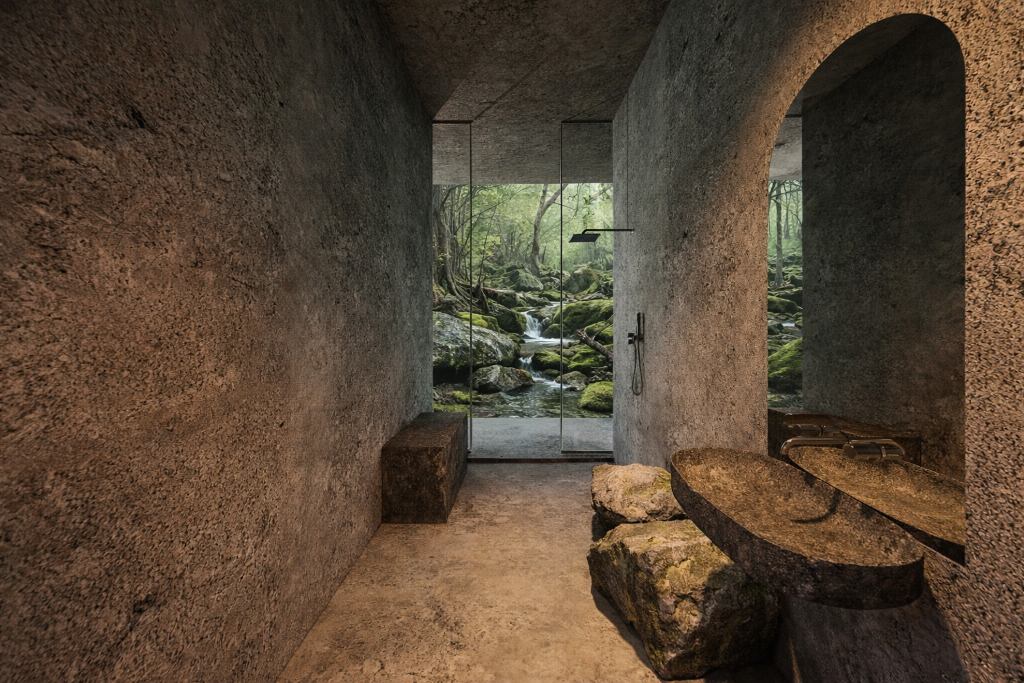
Natural stone bathroom with organic textures and forest views
The design seamlessly integrates with the natural environment, creating a dialogue between architecture and landscape.
Environmentally conscious material selection and energy-efficient systems minimize the ecological footprint.
Every design element serves both an aesthetic and functional purpose, creating spaces that are beautiful and livable.
The architecture prioritizes the well-being and comfort of its inhabitants through thoughtful spatial design.