Desert Pavilion Residence
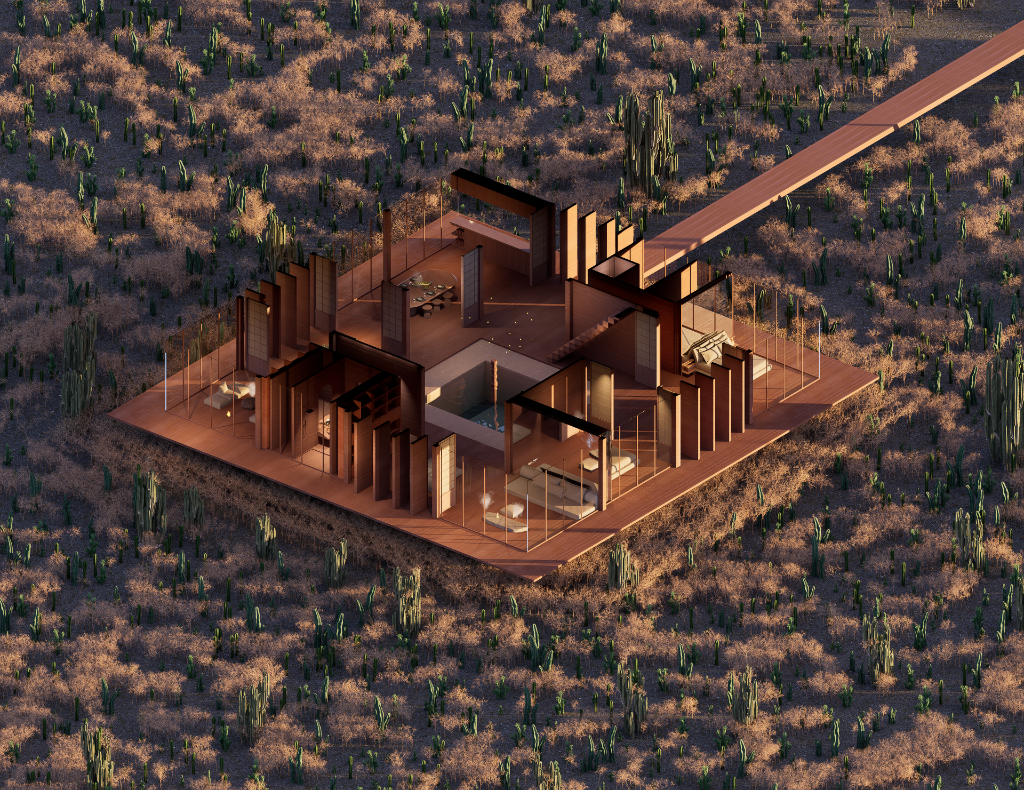
WIND WITHIN WALLS is a poetic exploration of boundaries and openness in the stark beauty of the Sonoran Desert. The residence challenges traditional notions of enclosure by using vertical corten steel blades that frame rather than contain, creating a dwelling where wind, light, and landscape flow freely through the architecture.
The design employs a deconstructed pavilion concept, where rusted steel walls stand as rhythmic sentinels against the horizontal expanse of the desert. These vertical elements some solid, some transparent create ever-changing patterns of shadow and light while allowing natural ventilation to cool the interior spaces. The architecture breathes with the desert, channeling prevailing winds while providing selective shelter from the harsh sun.
Floor-to-ceiling glass walls dissolve the boundary between interior and exterior, offering panoramic views of saguaro cacti, mountain ranges, and endless sky. Warm terracotta floors echo the desert earth, while rich wood-clad ceilings and walls create intimate human-scaled spaces within the vast landscape. This is architecture as frame a thoughtful intervention that celebrates rather than dominates its powerful natural setting.
Aerial perspective revealing the deconstructed pavilion floating in the Sonoran Desert
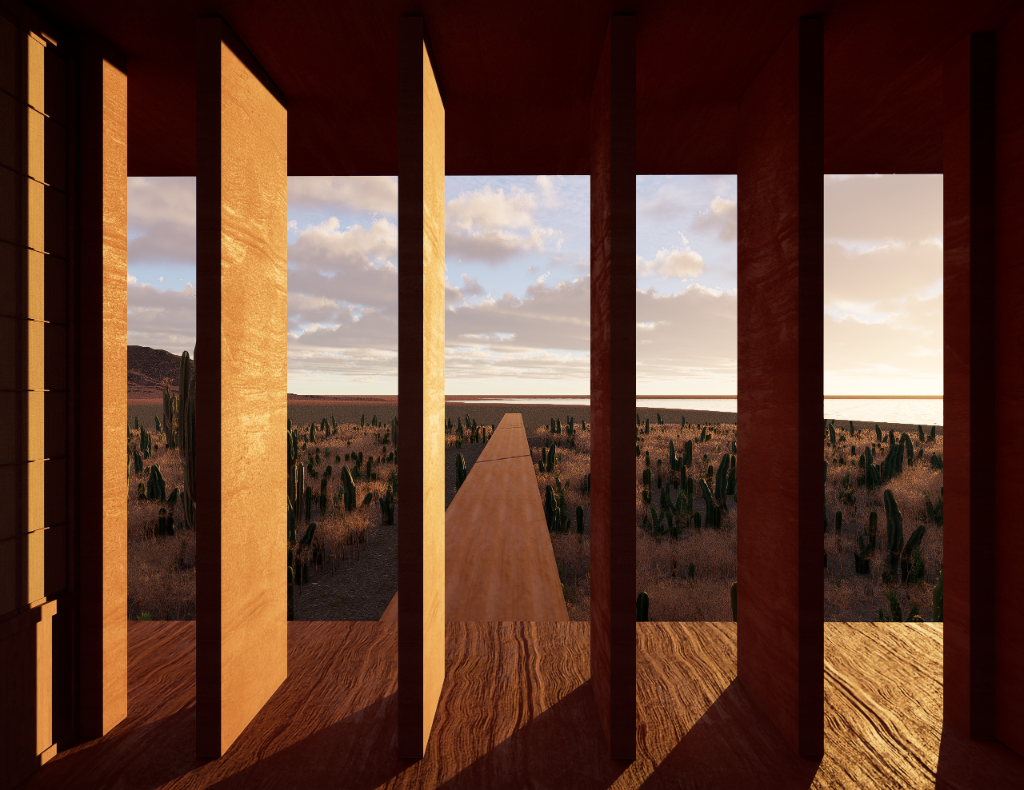
Rhythmic corten steel blades framing desert vistas and channeling natural ventilation
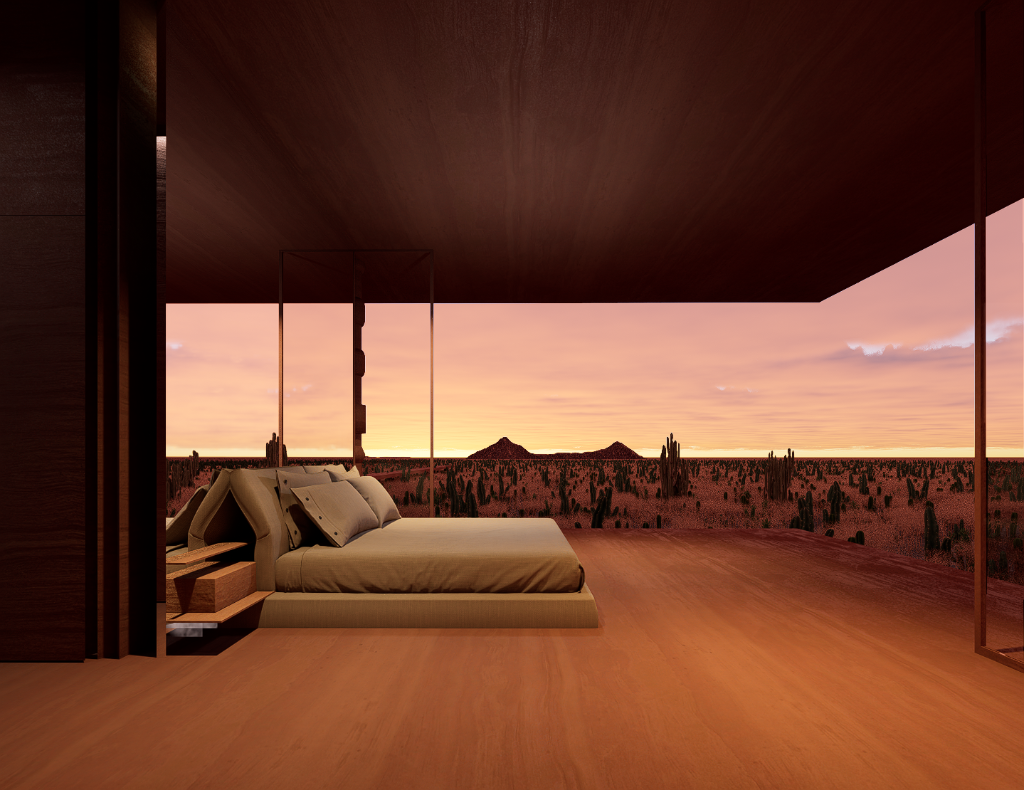
Master bedroom sanctuary with unobstructed desert sunset views
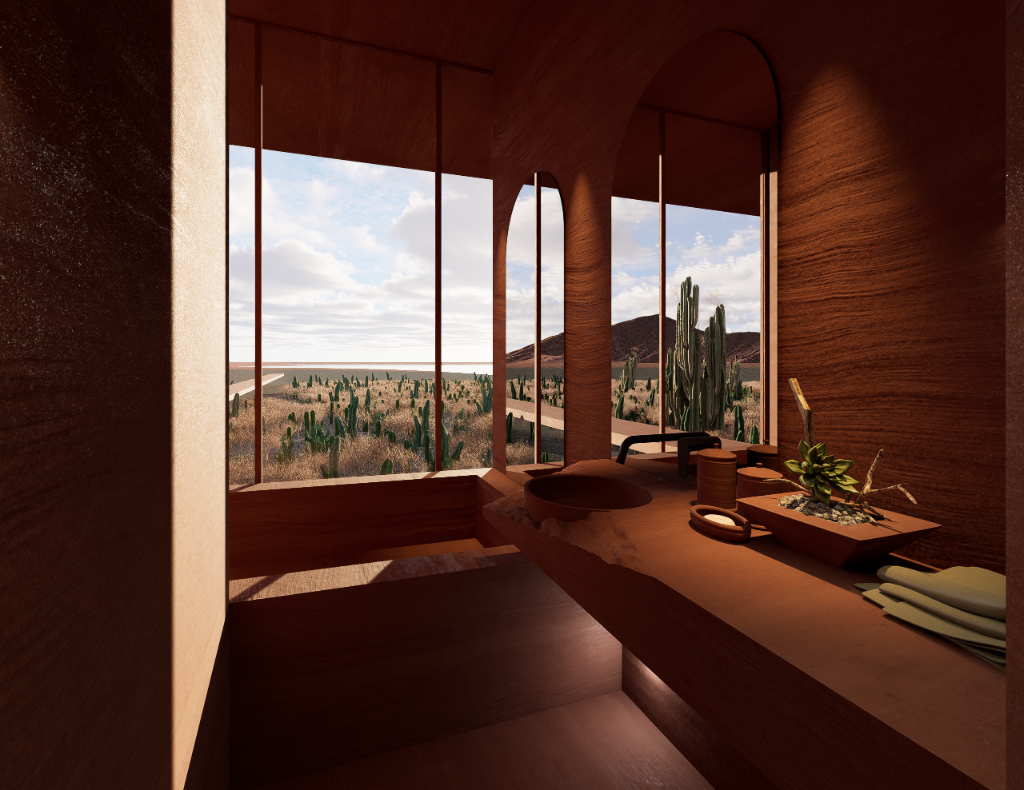
Wellness bath space featuring natural materials and landscape connection
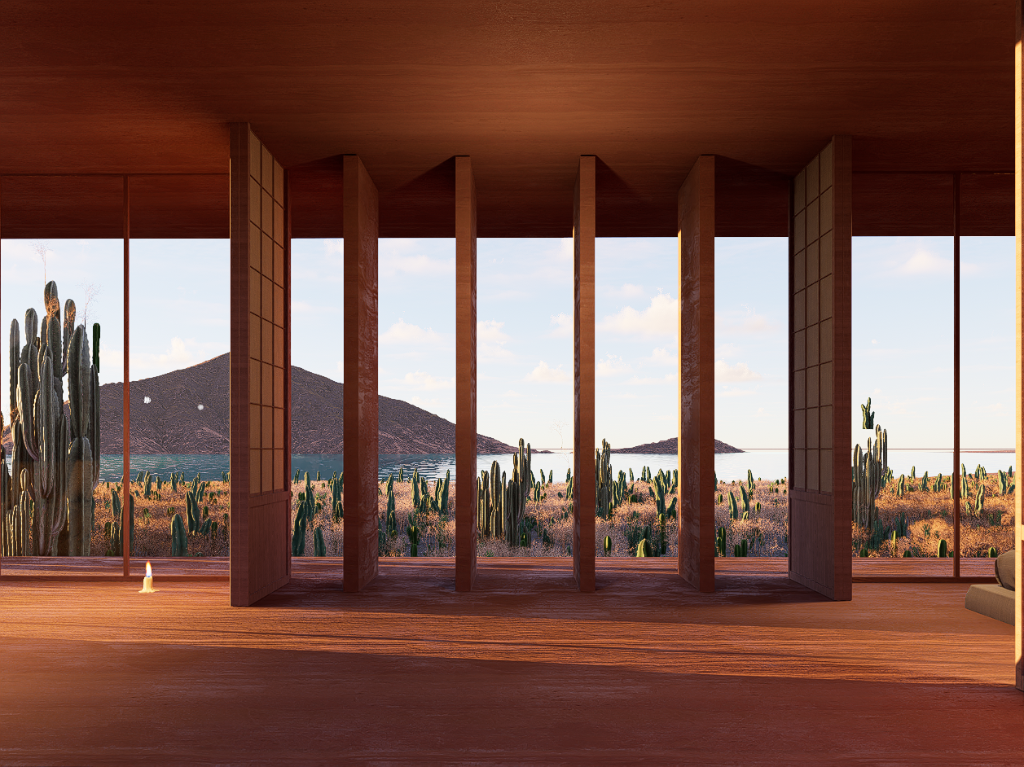
Main living pavilion with colonnade framing mountain and cactus views
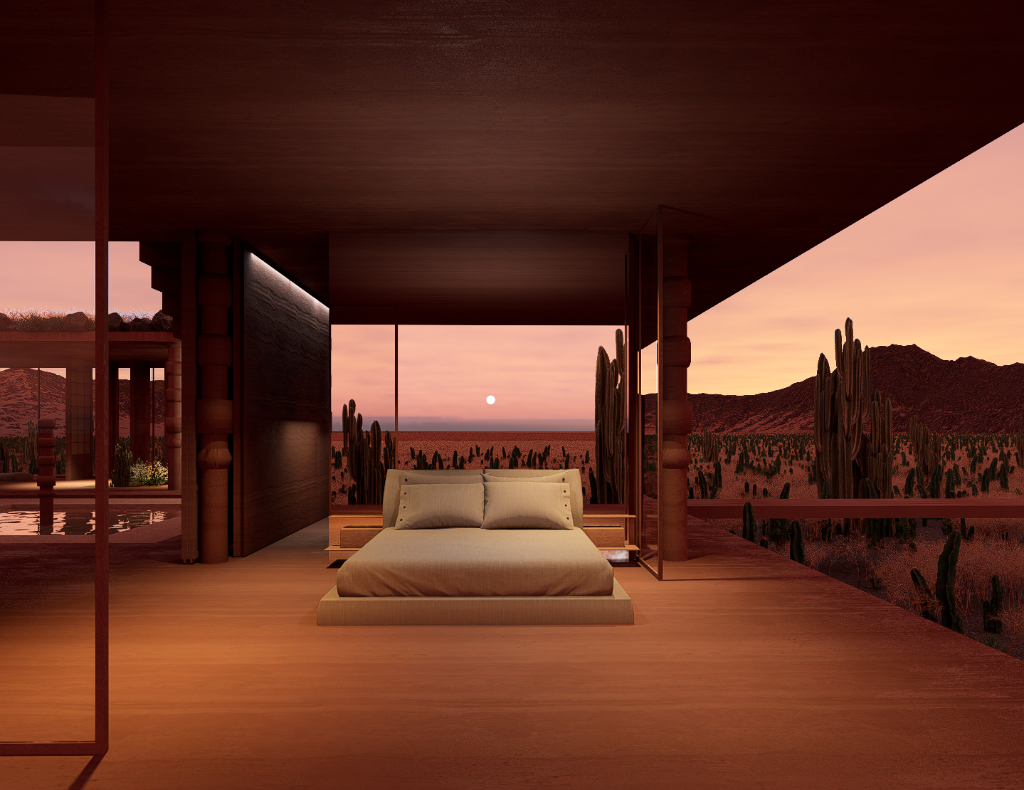
Bedroom pavilion at sunset the sun dissolves into the desert horizon beyond cactus silhouettes
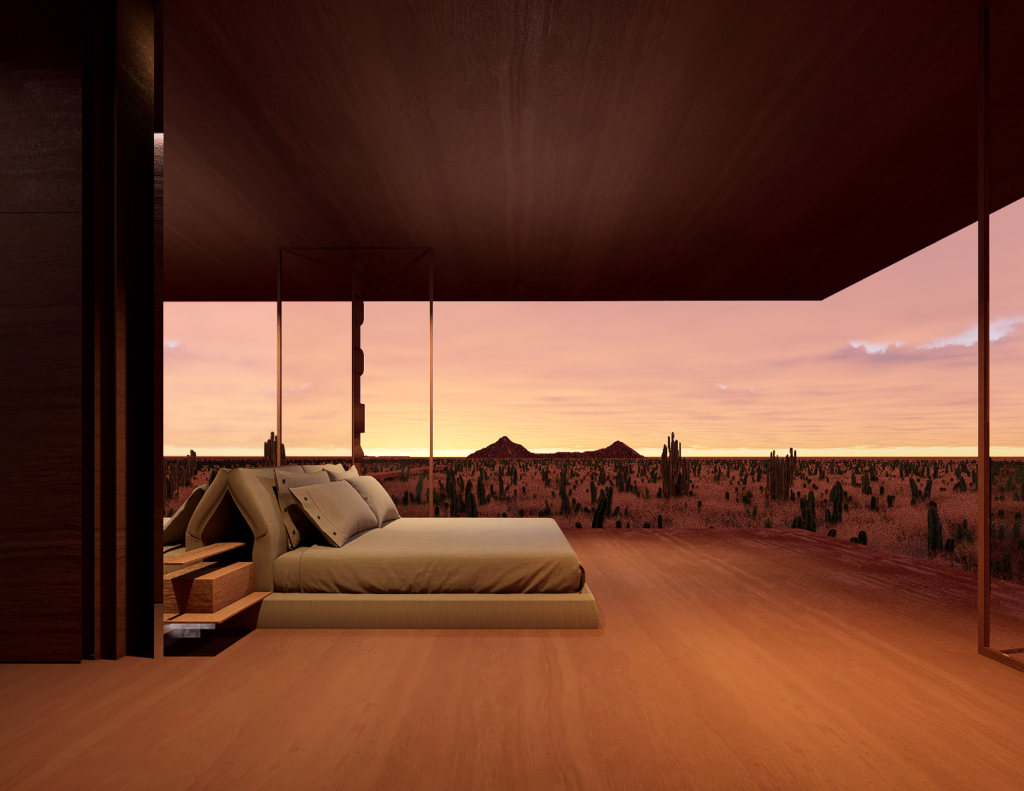
Floor-to-ceiling glazing frames the vast cactus desert and distant mesa at twilight
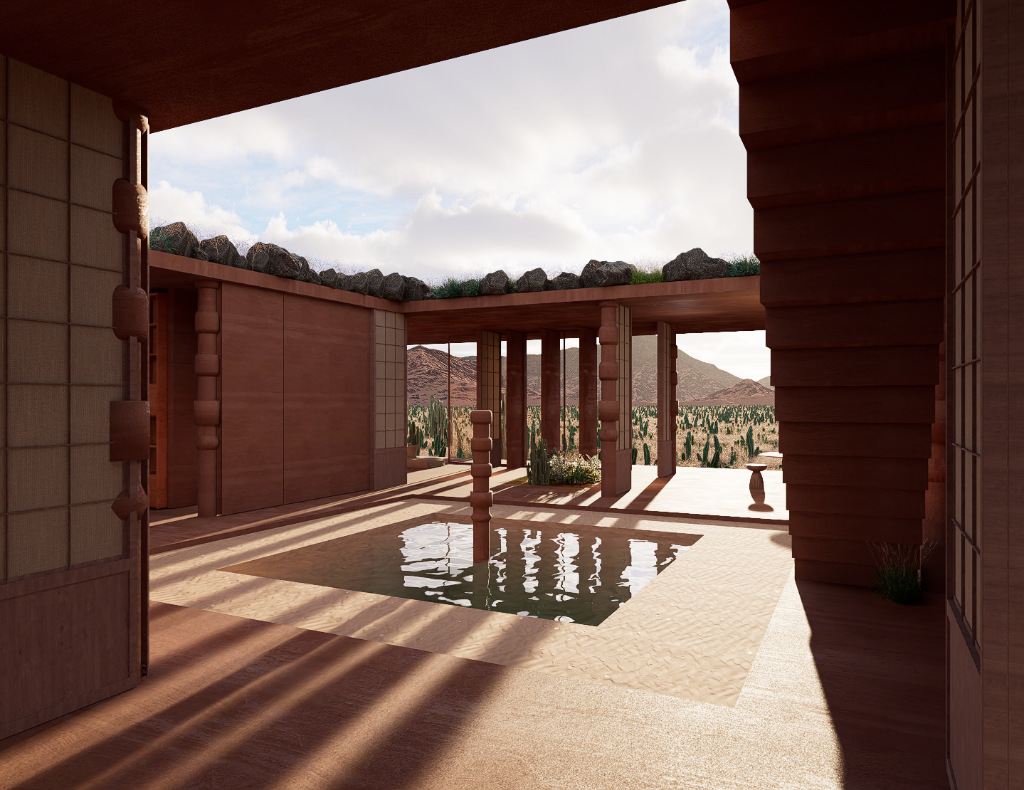
Central courtyard pool with colonnaded pergola and rock-studded green roof above
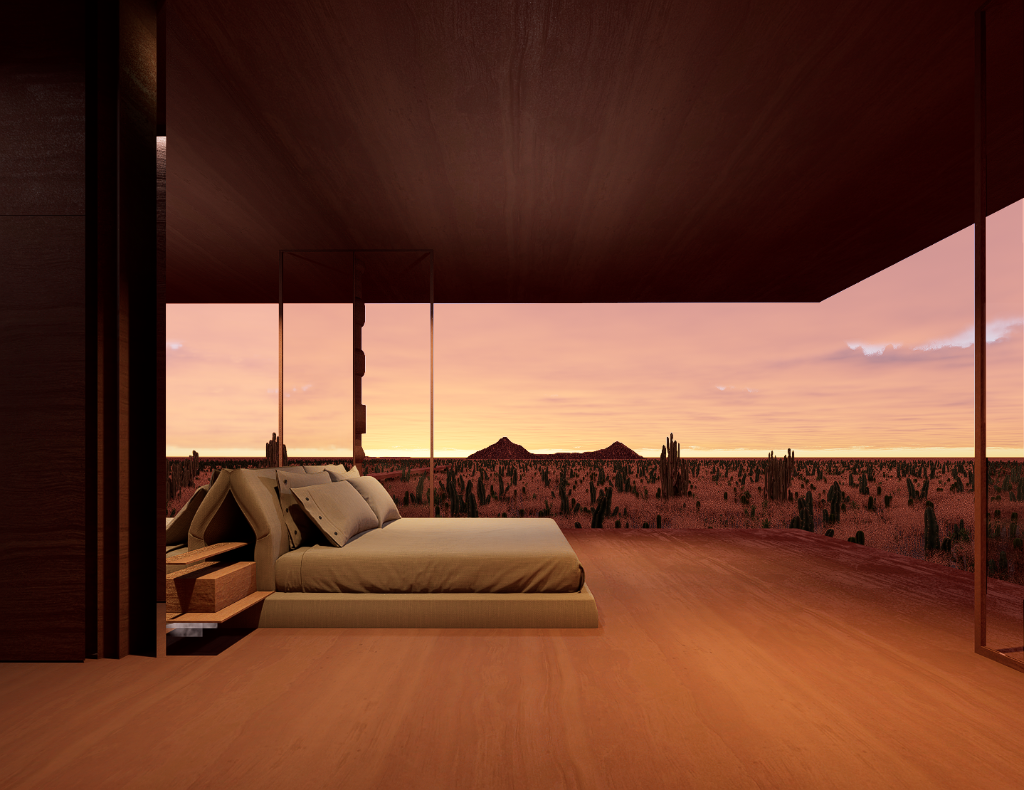
Warm desert dusk floods the bedroom through full-height glass walls
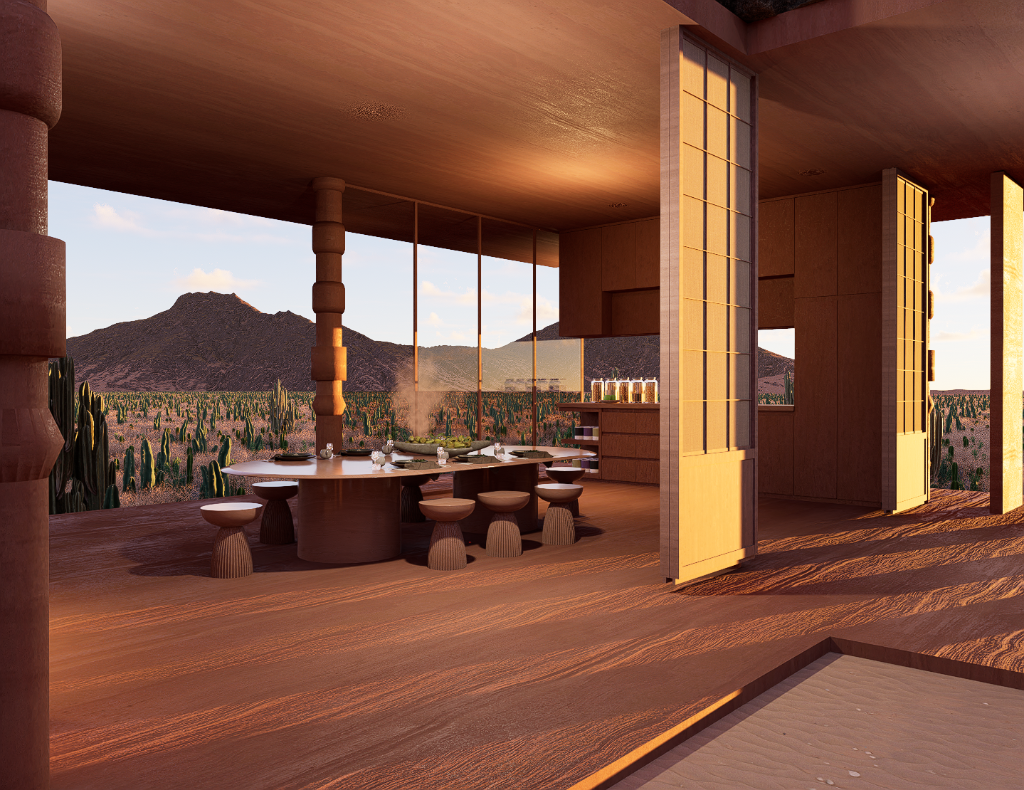
Open dining pavilion with sculptural table and mountain kitchen backdrop at golden hour
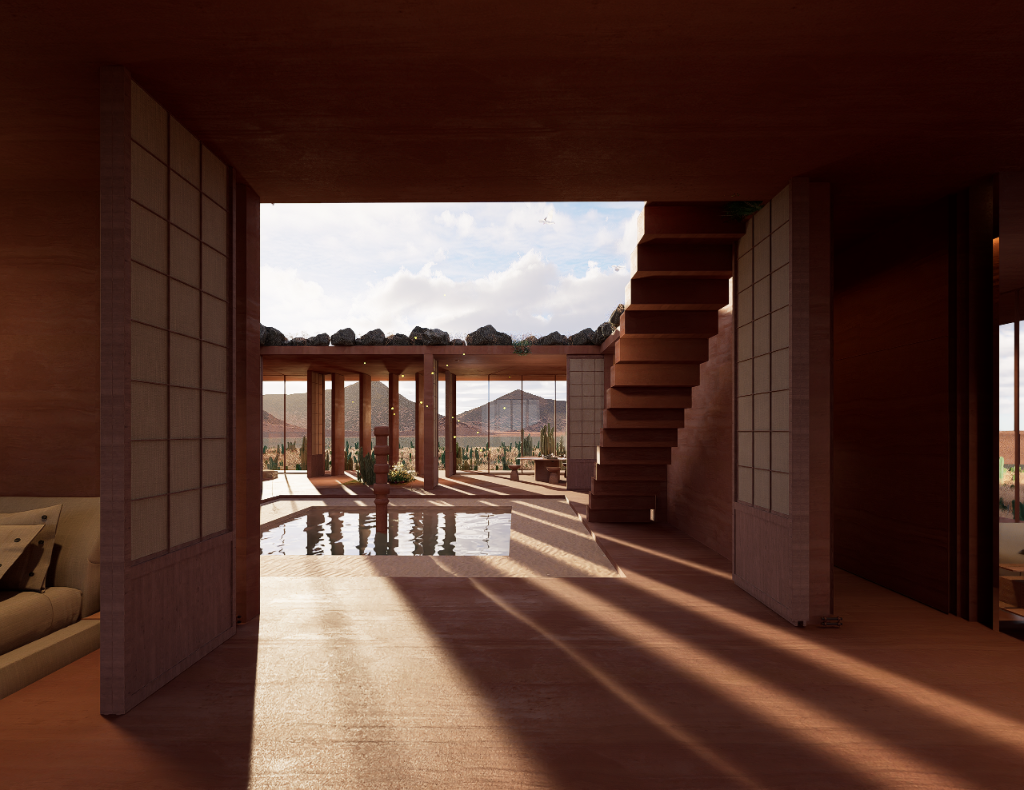
Sunlit interior courtyard with floating staircase, shoji screens, and reflective pool
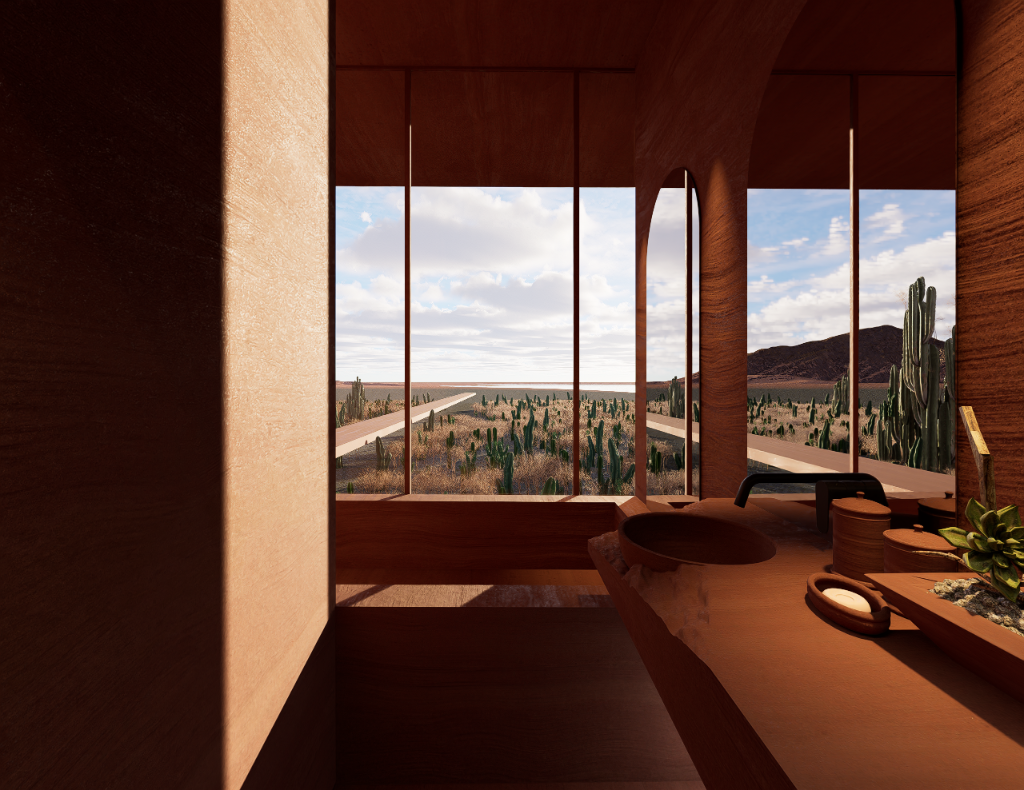
Terracotta bathroom with arched mirror and panoramic desert landscape views
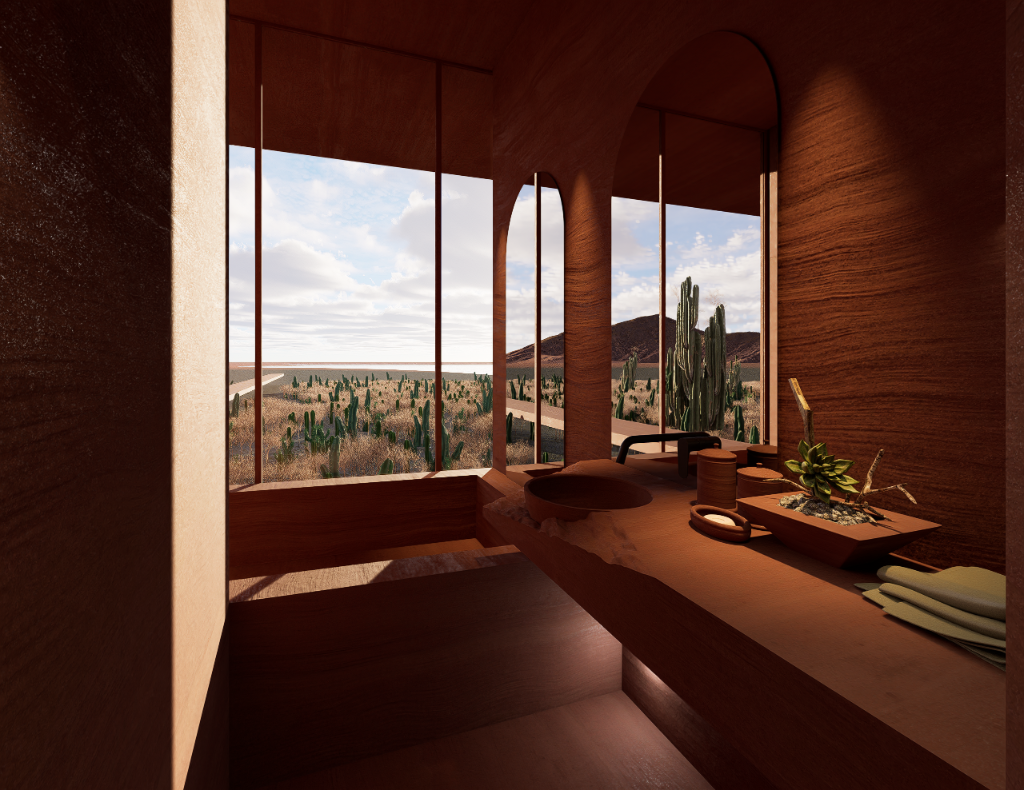
Intimate bathroom in warm afternoon light cactus gardens and hills beyond the glass
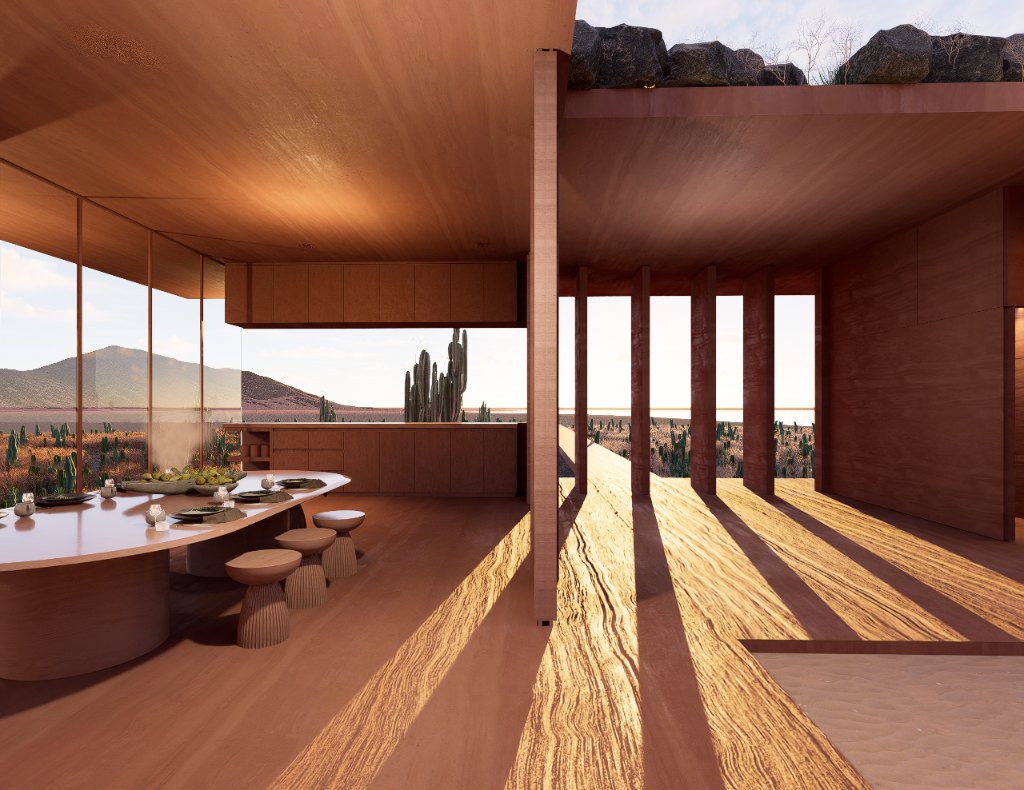
Kitchen and terrace colonnade bathed in dramatic morning light cast across warm timber floors
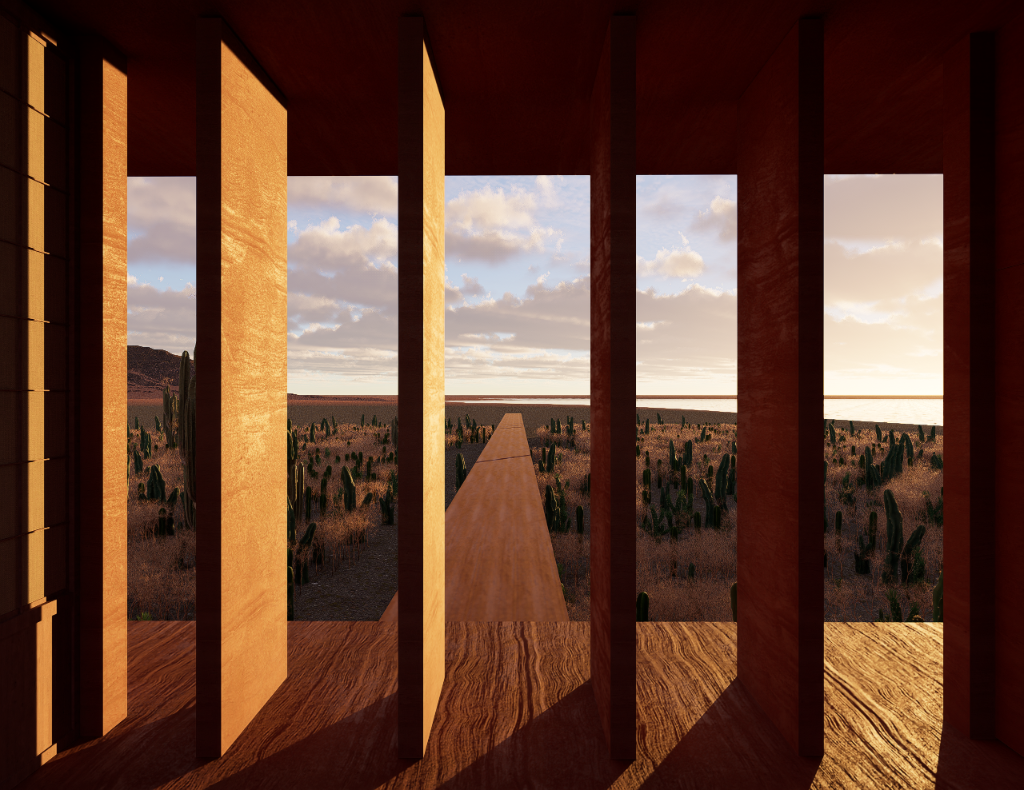
Vertical colonnade blades frame the infinite desert path toward the sea at golden hour
The vertical steel blades act as deliberate frames, directing attention to specific views while allowing the desert landscape to remain the primary focus. Architecture becomes a viewing device rather than an enclosed shelter.
Corten steel blades provide shading while their spacing allows prevailing winds to naturally ventilate the interior. The rusted patina reflects the desert's warm palette and requires no maintenance in the arid climate.
Multiple layers of solid and transparent planes create depth and visual complexity. As one moves through the space, the relationship between walls, glass, and landscape constantly shifts, offering new perspectives.
The elevated structure and minimal foundation footprint preserve native vegetation and natural drainage patterns. The design celebrates the desert's beauty while treading lightly on this fragile ecosystem.
The corten steel cladding develops a protective rust patina that requires no painting or maintenance while providing excellent durability in the desert climate. Vertical blade elements range from 3-6 meters in height, creating a colonnade effect that recalls ancient desert architecture while employing contemporary fabrication techniques. The weathering steel's warm orange-brown tones harmonize perfectly with the desert's color palette.
The residence is organized as a series of pavilions connected by glass corridors, allowing each space to maintain visual connection while providing acoustic and thermal separation. Living areas face west toward mountain views and sunset, while sleeping quarters orient east for morning light. Service spaces nestle within solid walls that provide privacy and shelter.
The spacing and orientation of vertical blades create a Venturi effect that draws air through the building, providing natural cooling without mechanical systems during most of the year. Operable glazing on opposite sides enables cross-ventilation, while the blade design shades glass surfaces without blocking airflow. Thermal chimneys in taller blade elements enhance stack-effect ventilation.
Throughout the day, the blade arrangement creates constantly shifting patterns of light and shadow across interior surfaces. Morning sun creates strong contrasts, while midday light is diffused by blade spacing. The low desert sun at golden hour illuminates the corten steel, bathing interiors in warm reflected light. At night, concealed lighting transforms the blades into glowing lanterns visible across the desert.
WIND WITHIN WALLS demonstrates how thoughtful design can create comfortable living in extreme climates with minimal energy consumption. The natural ventilation system, thermal mass of terracotta floors, and strategic shading by steel blades eliminate the need for air conditioning during spring and fall months, reducing energy use by an estimated 60% compared to conventional desert homes.
All materials were selected for longevity and low maintenance in the desert environment. Corten steel requires no painting or finishing, developing its protective patina naturally. Glazing features low-E coatings that block infrared heat while maintaining transparency. Terracotta floors provide thermal mass that moderates temperature swings between hot days and cool nights. Rainwater from the roof is collected and stored for landscape irrigation, supporting native plant restoration around the site.
The elevated structure on steel piers preserves the desert floor and its delicate cryptobiotic soil crust, allowing rainwater to percolate naturally and native plants to thrive beneath and around the building. Construction access was limited to existing roads, and native vegetation removed during building was transplanted and is monitored for survival. The design proves that contemporary architecture can enhance rather than degrade sensitive desert landscapes.